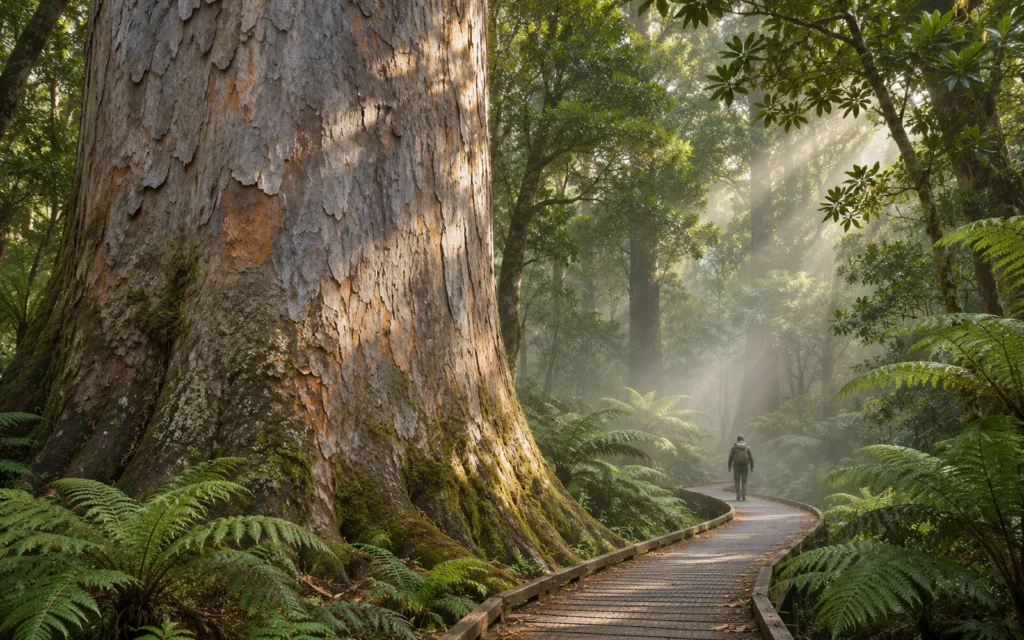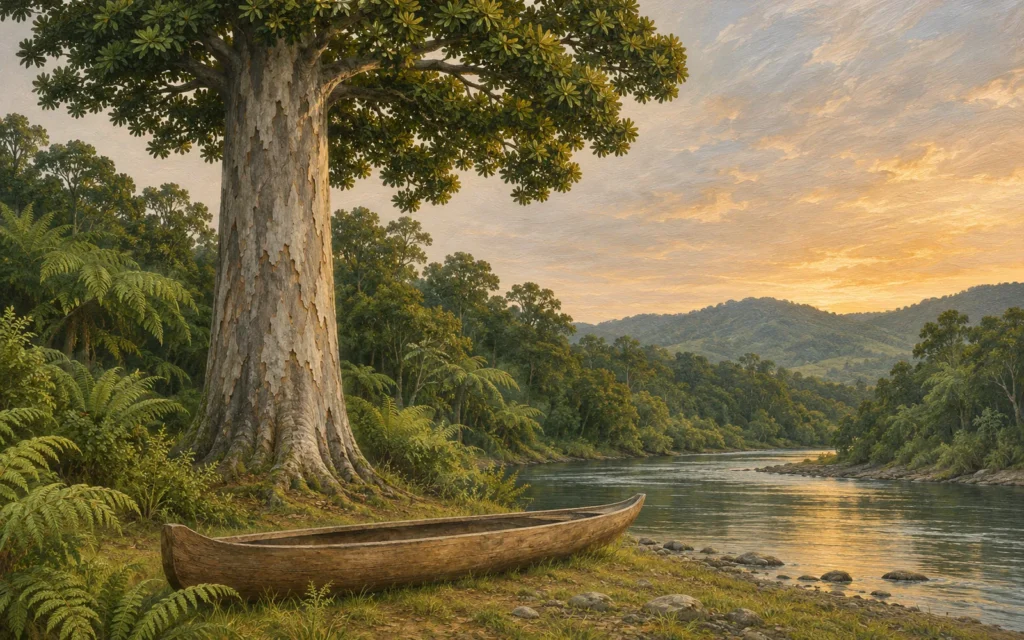
Kauri (Agathis australis) belongs to an ancient conifer family, the Araucariaceae, and appeared in New Zealand about 20 million years ago. Today it grows naturally only north of about latitude 38° south, in Northland, Auckland and the Coromandel Peninsula, from sea level to around 600 metres. Individual trees can live for well over a thousand years.
A forest that once covered the north
Before large-scale logging, kauri forest covered about 1.2 million hectares, from the Kaimai Ranges to the far north. Most of it was felled between the mid-1800s and the 1930s. Only about 7,455 hectares of mature kauri forest remains, in scattered patches such as Waipoua Forest, the Waitākere Ranges, Puketi and the Coromandel Forest Park. There is hope too: an estimated 60,000 hectares of regenerating forest and scrub now contains young kauri. Fossils show kauri once grew as far south as Invercargill.
How a kauri grows
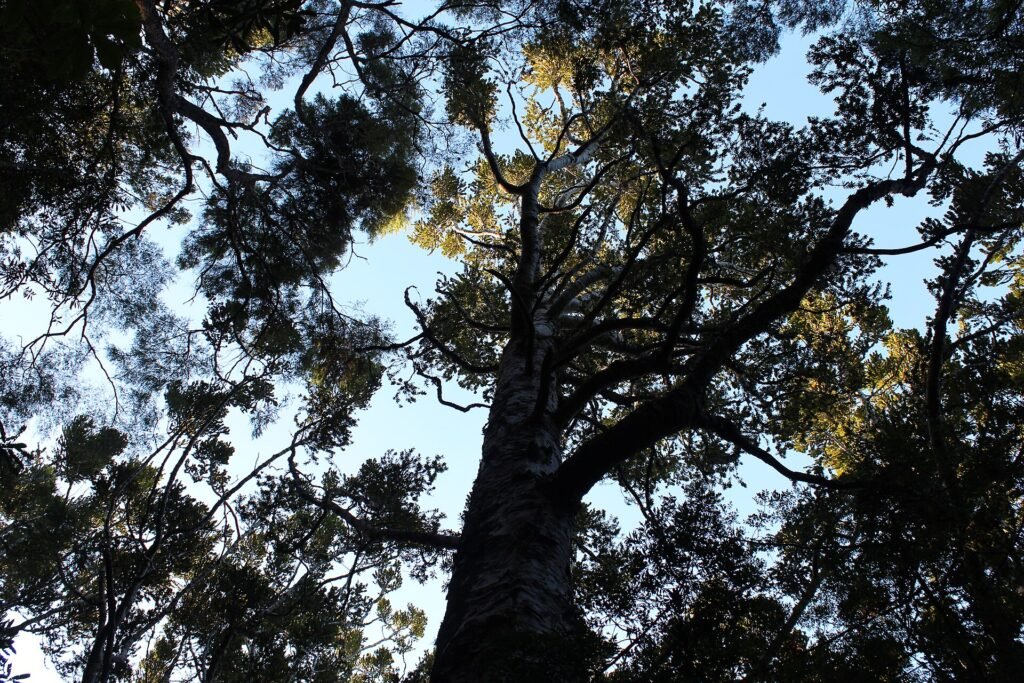
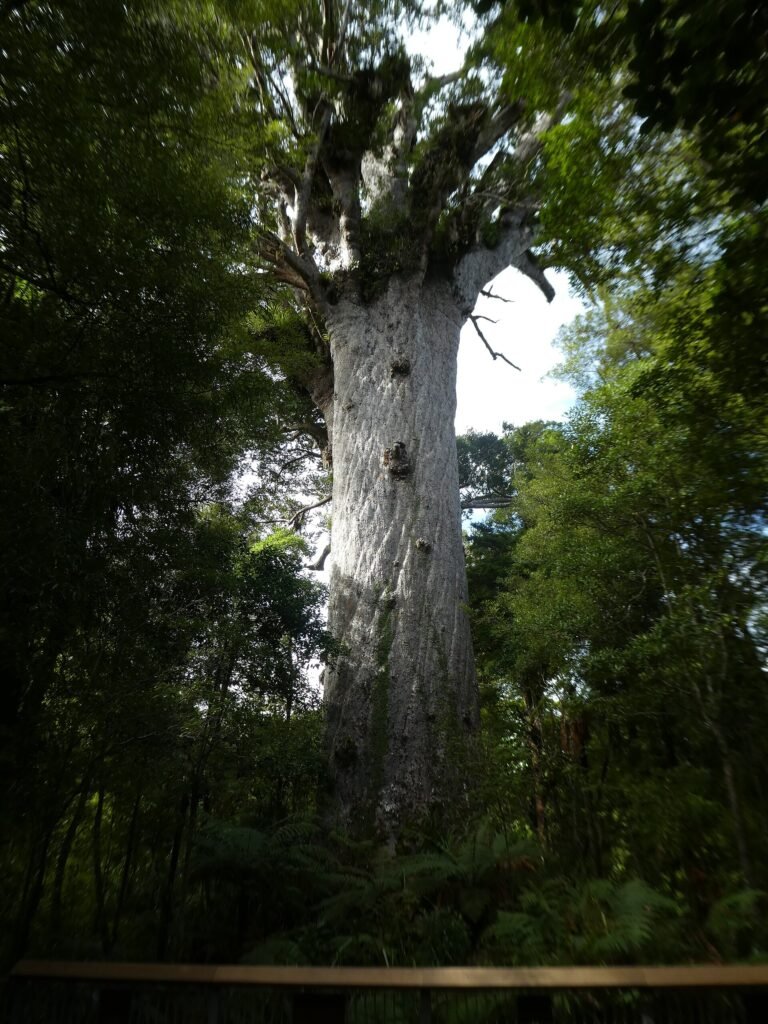
Young kauri grow as narrow pyramids. They take 50 years or more to reach the forest canopy, shedding their lower branches to become clean-stemmed “rickers”, a name that comes from the ships’ spars they were once cut for. Mature trees average 30 to 40 metres tall, with a smooth trunk that rises like a pillar before the crown spreads above the rest of the forest. The grey bark flakes off in a pattern like hammer marks. The leaves are flat and leathery, bronze when young and bright green when mature. Male cones are finger-shaped; the round female cones ripen over three years and release seeds on the wind.
Gum: the tree's own bandage
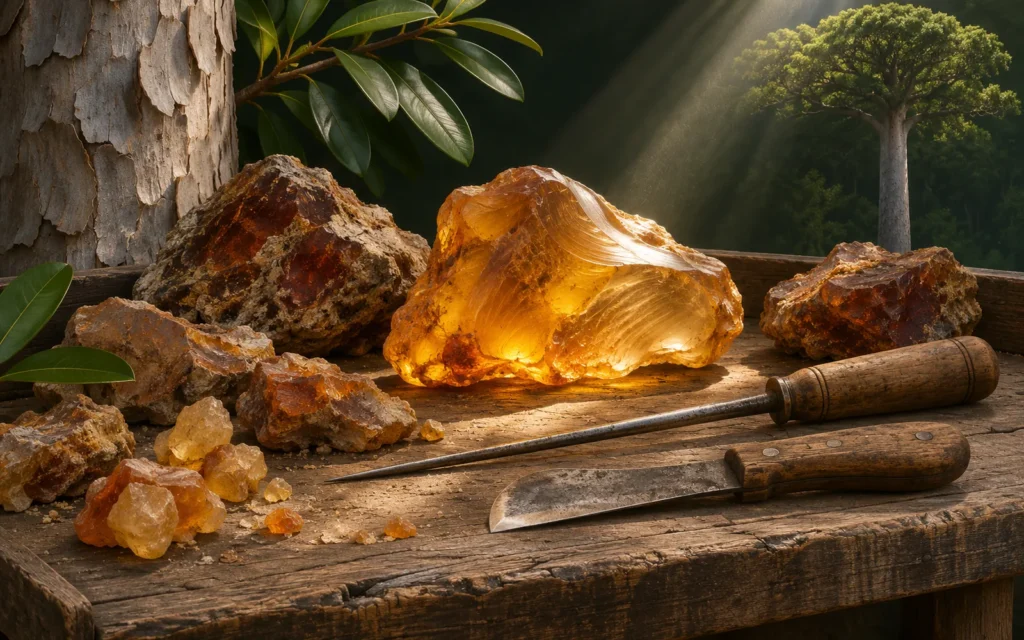
When a kauri is damaged, it oozes resin from its bark, branches and cones to seal the wound. The resin hardens into gum that collects in forks, around the roots and on the ground. Buried for thousands of years, that gum became the treasure of the gumfields.
Life on a kauri
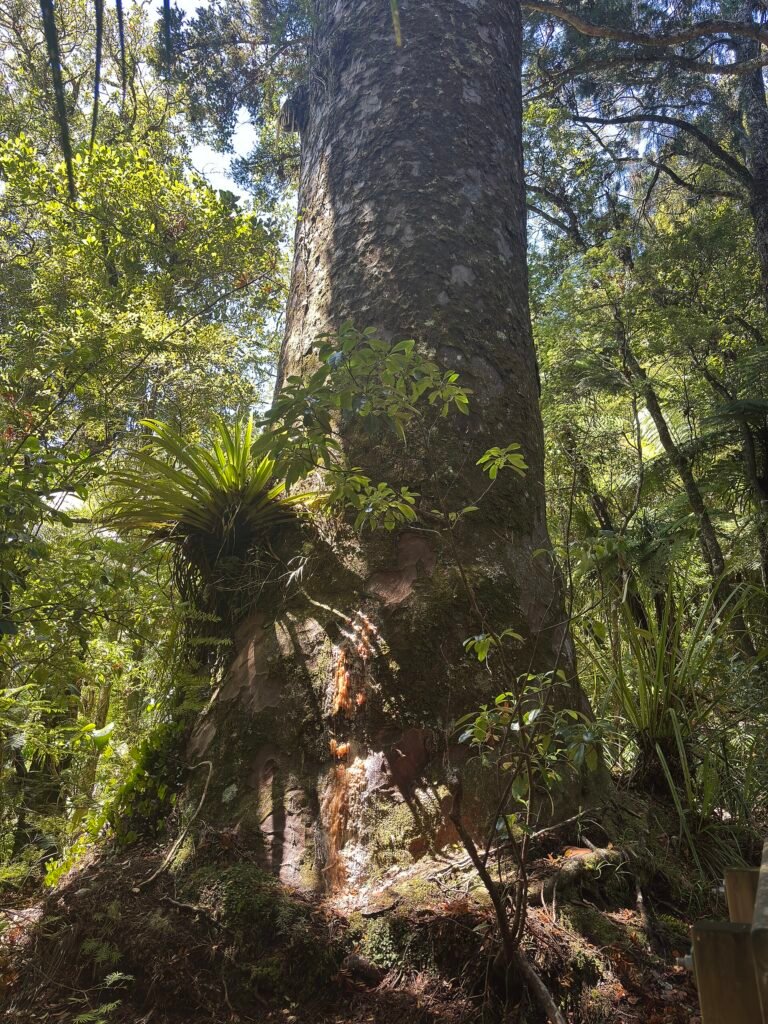
A mature kauri is a world of its own. Perching plants crowd its branches, and the deep layer of fallen bark and leaves around its base shapes the soil beneath it. Kauri forest is rich: often around 20 tree species grow in a single hectare, with rimu, miro and other conifers beneath the kauri. Kauri roots spread wide and shallow, anchored by peg roots, with a fine mat of feeding roots in the litter around each tree, which is why visitors must keep to tracks and boardwalks.