From Croatia’s Adriatic coast to Northland’s swamps and scrublands, Dalmatian migrants became a distinctive presence on the kauri gumfields from the 1880s onwards. By the turn of the century almost 2,000 Dalmatians had reached New Zealand’s shores, drawn by news of work digging golden kauri gum. By 1900, hundreds of Dalmatians were on the gumfields, camping together in groups, digging the swamps in summer and the hills in winter. Their story is one of hard physical labour, discrimination, resilience, and lasting cultural influence in the north.
Why they came
Dalmatia was exploited by Venice and the Austro-Hungarian empire, with opportunities for illiterate peasants limited to subsistence farming, grape-growing, quarrying, fishing and seafaring, while population increase put pressure on scarce land. Around 1892 Austria-Hungary signed a trade agreement with Italy that excluded Dalmatia, and phylloxera decimated vineyards, pushing men to sail for far corners of the world, with many also escaping Austrian army conscription introduced in 1881. The first Dalmatians in New Zealand probably arrived via Californian and Australian goldfields, and by the early 1860s they were prospecting South Island diggings, before some began pulling golden kauri gum from Northland’s gumfields in the 1880s, with wayfarers returning home describing Nova Zelanda as a land of good prospects.
Life on the gumfields
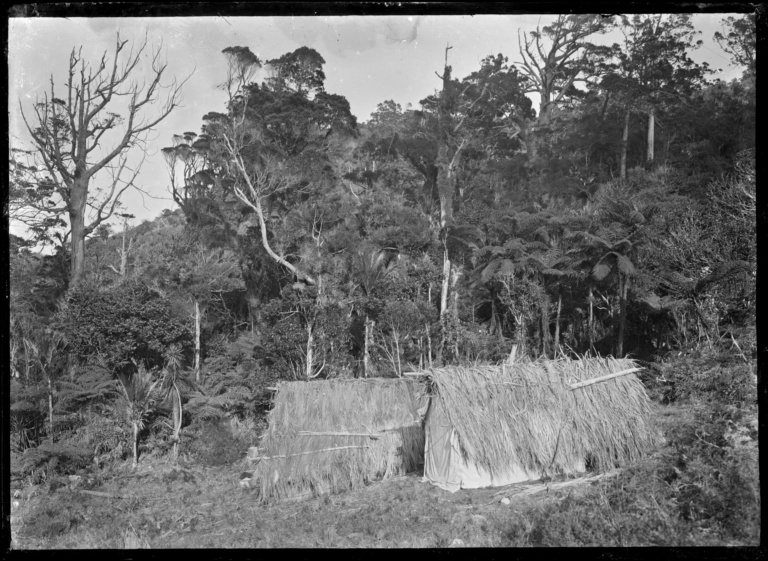
Dalmatians, Māori and British worked as diggers, using a spear to find gum and a specially designed spade to dig it up. Finding gum was heavy and painstaking work, with the ground tested for gum using a long rod, with any likely lumps then dug up. Gum digging was hard work and difficult to make enough money, with diggers living in rough huts, working six days a week, and spending their evenings cleaning the gum by scraping it with a knife, while some also made ornaments by melting or carving the gum.
A camp photographed in 1901 at Waipapakauri near Ninety Mile Beach showed gum diggers posing in front of their homes, and in open areas sod and sack dwellings were common, with the chimney and lower walls of the cottage built with sods cut and squared with a gum spade. Many Dalmatians sent much of what they earned home to what is now Croatia, and would eventually return themselves. Referred to as birds of passage, some 60% returned to Dalmatia.
Innovation and community
In the 1890s John Ivan Botica fitted the tip of a gum spear with a wire coil, so once the spear was pulled out the digger could decide whether the object was precious gum or just a worthless buried stump. The Dalmatians became known for their methodical approach and their strong group loyalty.
Dalmatian and Māori gum diggers gathered at Houhora in Northland on New Year’s Day 1911, with a number of Dalmatians paying Māori to make them a hāngī, and the diggers and their friends about to feast on a pig being carved. This photo speaks to the working relationships and social connections that developed on the gumfields, particularly between Dalmatian and Māori communities.
Discrimination and restrictive laws
Most Dalmatians came to New Zealand to work on the kauri-gum fields, and were regarded as illiterate and dirty, with the 1898 Kauri-gum Industry Act introducing kauri-gum reserves for British subjects only, and licences for gum-digging. The Kauri-gum Industry Act had reserved more desirable locations for British-born diggers, which may explain why some Dalmatian crews found themselves draining the Aranga Swamp at Maunganui Bluff in 1899.
The Act established kauri gum reserves exclusively for British subjects with a licensing system and three-month qualification for new arrivals, and under an act passed in 1910, British subjects alone could hold gum-digging licenses. As a result, Dalmatians’ applications for naturalisation were delayed, shipping companies were pressured to prevent further arrivals, and Dalmatians had to find work on private gumfields.
The law was passed after a commission of enquiry, set up because of British diggers’ complaints that Dalmatians were sending their earnings back home. In 1898 a second commission described Dalmatians as hardy, sober, industrious, law-abiding people who would make admirable settlers, but nothing was done to encourage settlement.
Beyond the gumfields
Many gum diggers came from Dalmatia where desperate conditions forced them to emigrate in search of work in the 1880s, with those arriving at the height of the gum-digging years mainly single men who endured harsh living and working conditions to earn enough to send money home. They faced prejudice from British settlers and suffered under discriminatory legislation, though many returned to their homeland, while others settled and turned to farming, fishing and winemaking, with their descendants, some of whom intermarried with Māori, becoming a distinctive ethnic sub-group in the north.
By 1907 Herekino, about 26 kilometres south of Kaitāia, had around 14 vineyards, all established by Dalmatian settlers, which between them produced about 9,000 litres of wine a year. The transition from gumfields to vineyards marks an important chapter in both Dalmatian settlement and New Zealand’s wine industry.
Lasting presence
The Dalmatian contribution to Northland extends far beyond the gumfields. Their descendants remain part of the region’s character, visible in surnames, in cultural organisations, and in the connections between Croatian and Māori families that began on the gumfields over a century ago.
You can explore more about this history in our gum diggers gallery, which includes photographs and stories from the kauri gum industry. The story of kauri gum also connects to the Kauri Gum Industry Act 1898 and the gumfield reserves, which shaped where and how diggers could work. For more on the region’s kauri history, visit our Northland page. Contemporary makers continue to work with kauri gum, creating kauri gum art and jewellery.