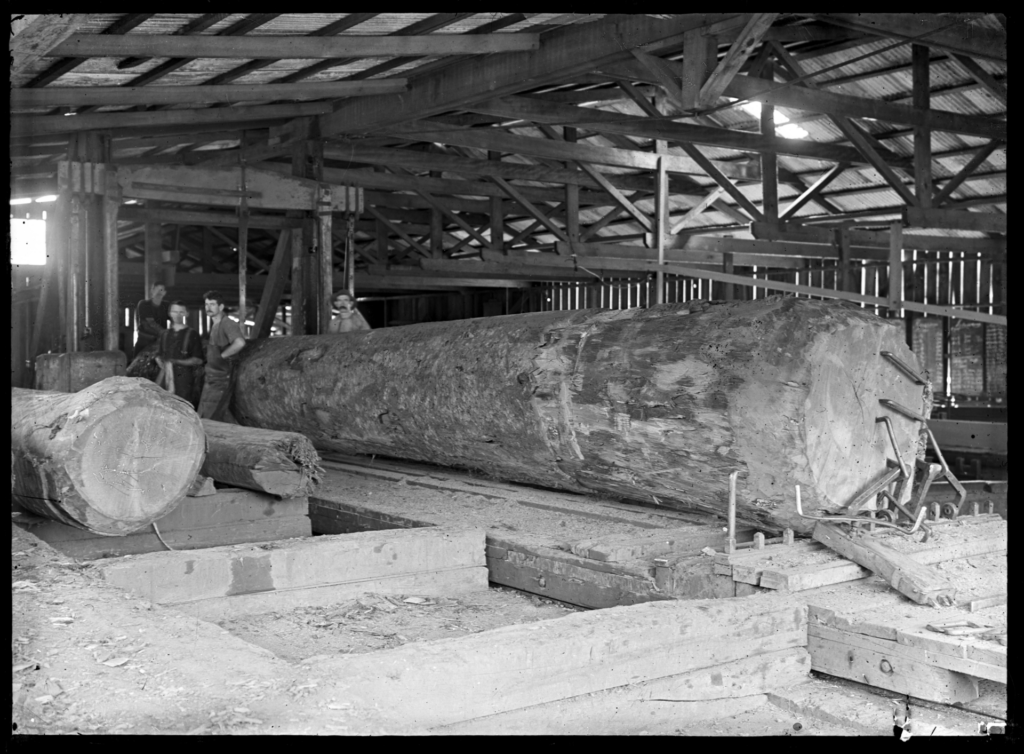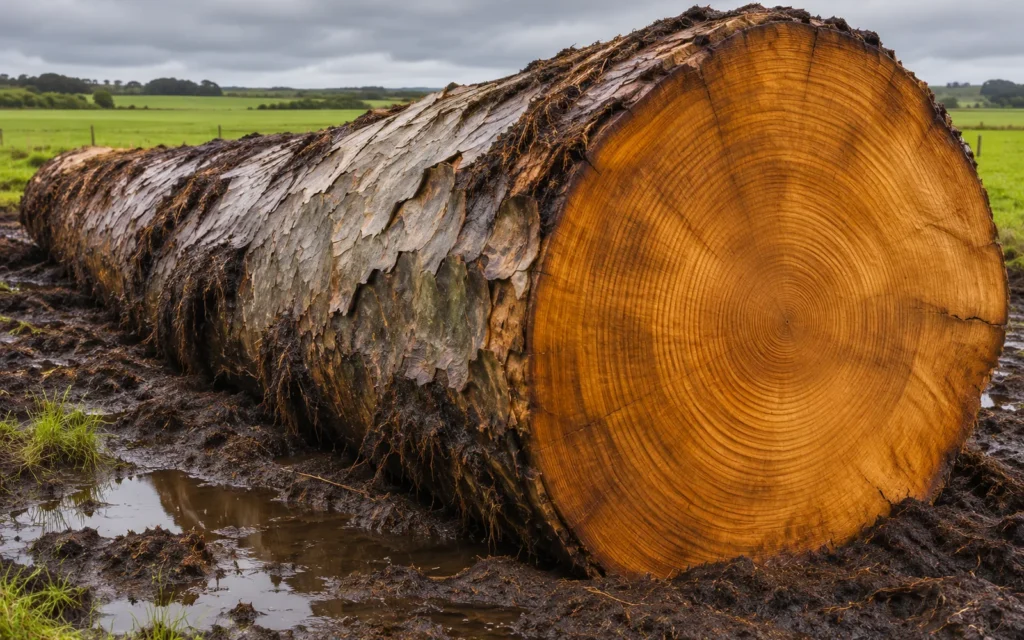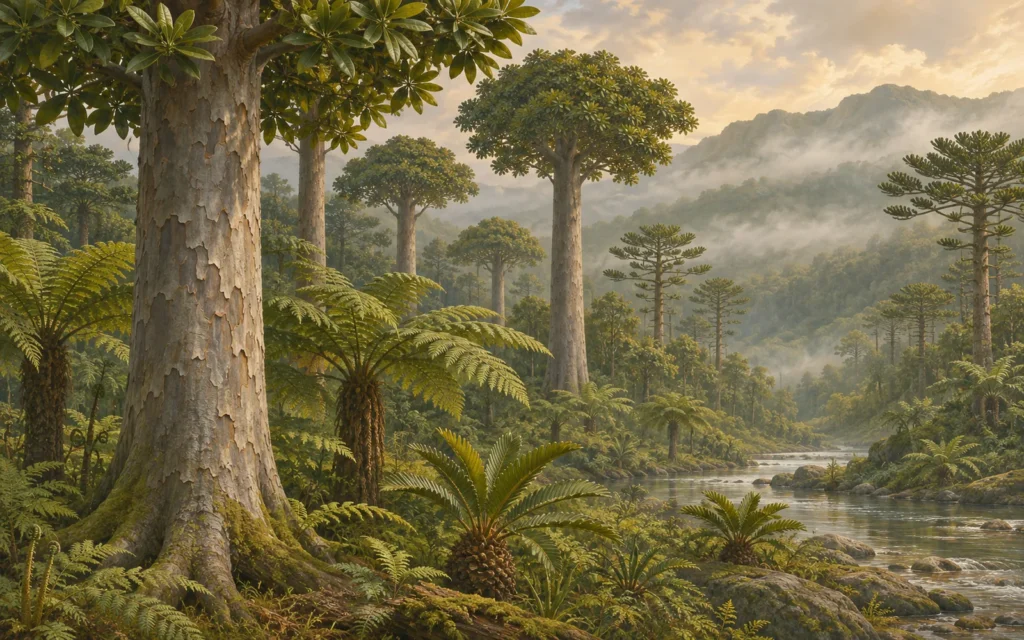
Kauri logging was New Zealand's first major land-based export industry. Straight, strong and easy to work, kauri timber built houses, ships and towns at home and overseas. In 1903 alone about 340,000 cubic metres was milled, around 40% of it exported.
Felling the giants
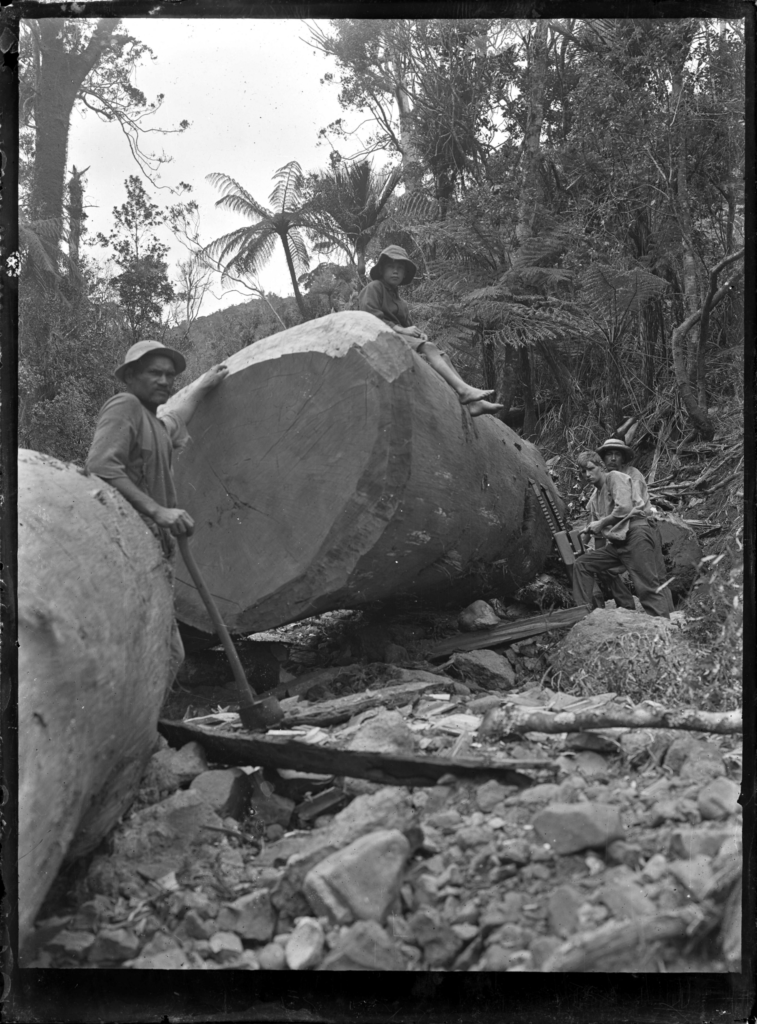
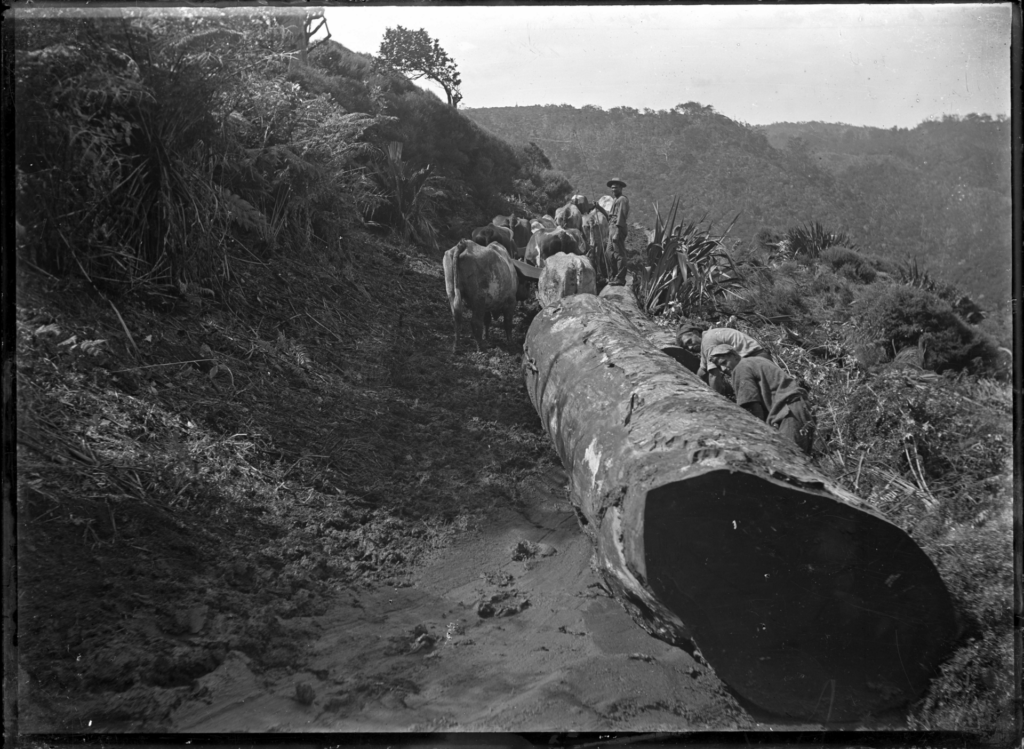
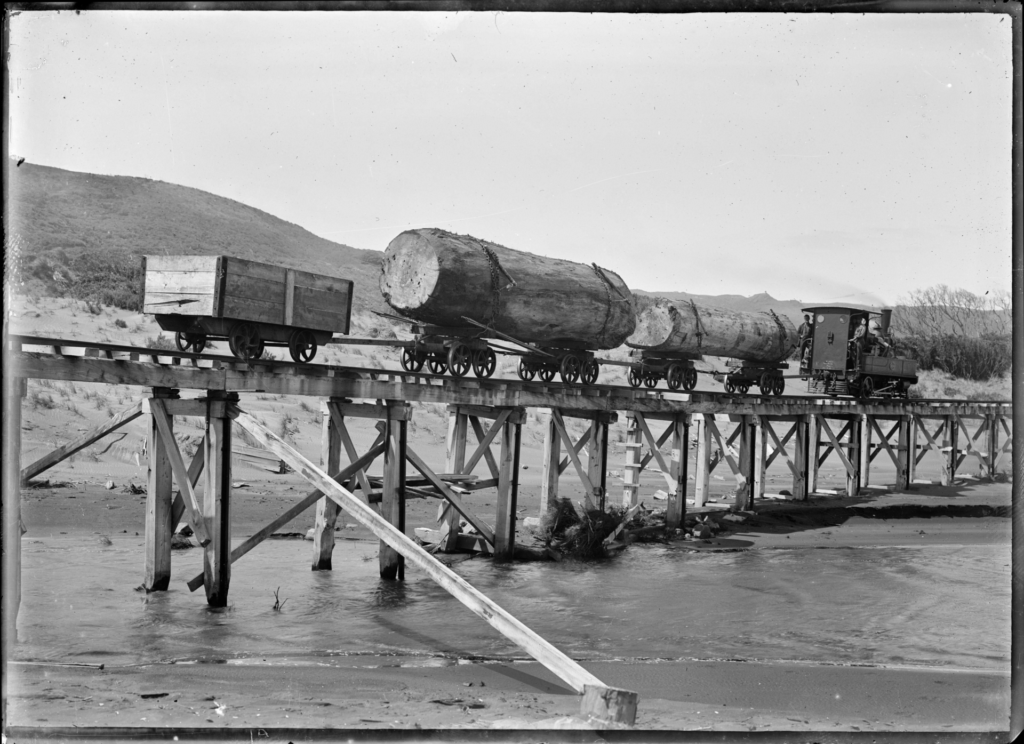
Bushmen worked from camps deep in the forest, felling trees with axes and cross-cut saws and moving logs with jacks, bullock teams and later steam haulers and bush tramways.
Driving dams
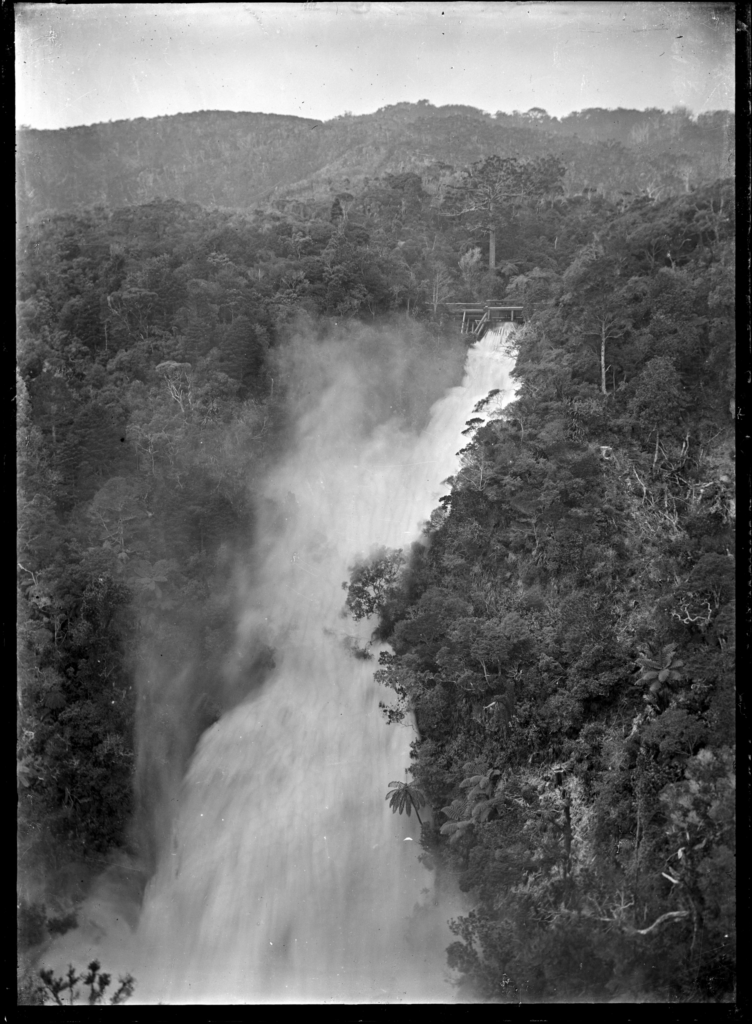
Where there were no roads, bushmen built timber dams across steep creeks. Logs were piled in the creek bed below, then the dam gate was tripped to release a surge of water that carried the logs down to booms in the lower valley. Around 3,000 dams were built, mostly in the Waitākere Ranges, Hokianga and Coromandel, from the 1850s. The driving was so violent that an estimated 30 to 40% of the logs felled may have been destroyed.
Kauaeranga Valley
In the Kauaeranga Valley on the Coromandel more than 60 dams were built. Dancing Camp Dam, built by Jim Angel in 1924, survives substantially intact, and DOC has built a one-third scale working replica near the visitor centre. Logging there lasted about 60 years, and the remaining forest was protected in 1970 as part of Coromandel Forest Park.
To the mills
Logs were rafted and towed to mills on harbours and rivers, then sawn and shipped. By the early 1900s most kauri forest had been logged, and a final push in the 1920s and 1930s left only a few patches standing.