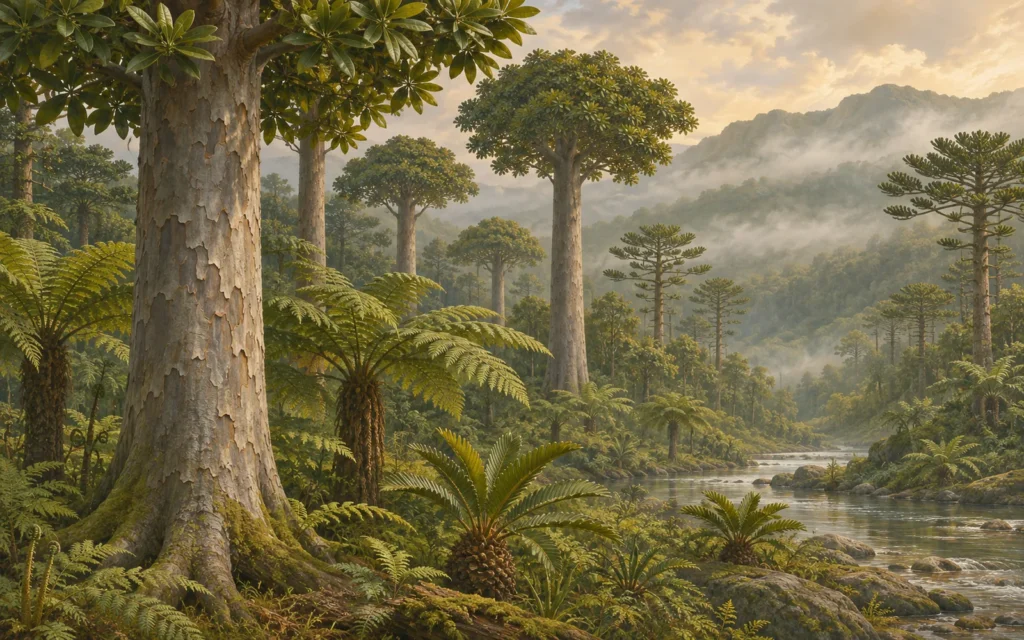
Across Northland, and as far south as Waikato, whole kauri trees lie buried in peat swamps. Sealed off from oxygen, their wood has been preserved for between about 800 and 60,000 years. Some of these trees were up to 2,000 years old when they fell.
How it was preserved
For a tree to become swamp kauri, it had to sink into damp ground and be sealed away from oxygen. Other settings that preserved kauri include dry riverbeds, coastal dunes and ancient lakes. Logs found during building work have been dated at around 45,000 years old.
A record of the Earth's past
Because swamp kauri preserve thousands of tree rings, scientists use them to study past climate. Research on ancient kauri has helped reveal what happened on Earth around a reversal of the planet's magnetic poles about 42,000 years ago.
The rules today
Swamp kauri is regulated. The Ministry for Primary Industries controls milling and export under the Forests Act 1949: milling needs an MPI milling statement and can only happen at MPI-registered sawmills, and extraction needs council consent under the Resource Management Act. Swamp kauri can only be exported as a finished product, or as stumps and roots that MPI has inspected and approved. In 2018 the Supreme Court clarified what counts as a “finished or manufactured” product.
Made from swamp kauri
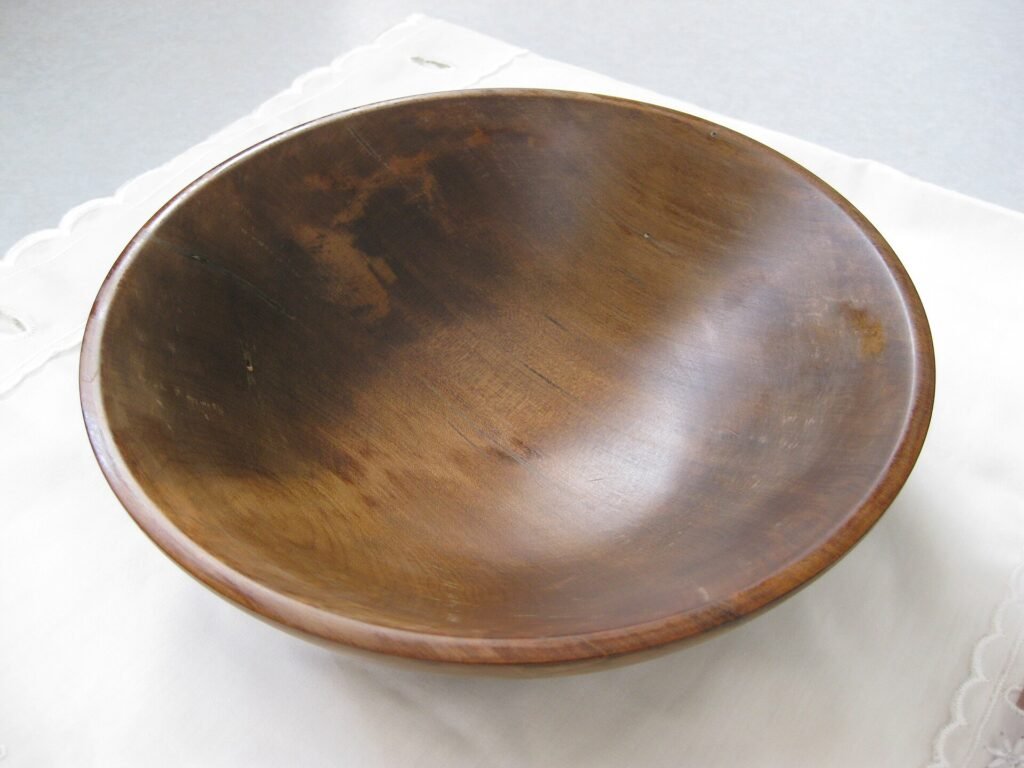
Today swamp kauri is made into furniture, bowls and art, prized for its golden, shimmering grain. Find makers in our Makers and Places directory.